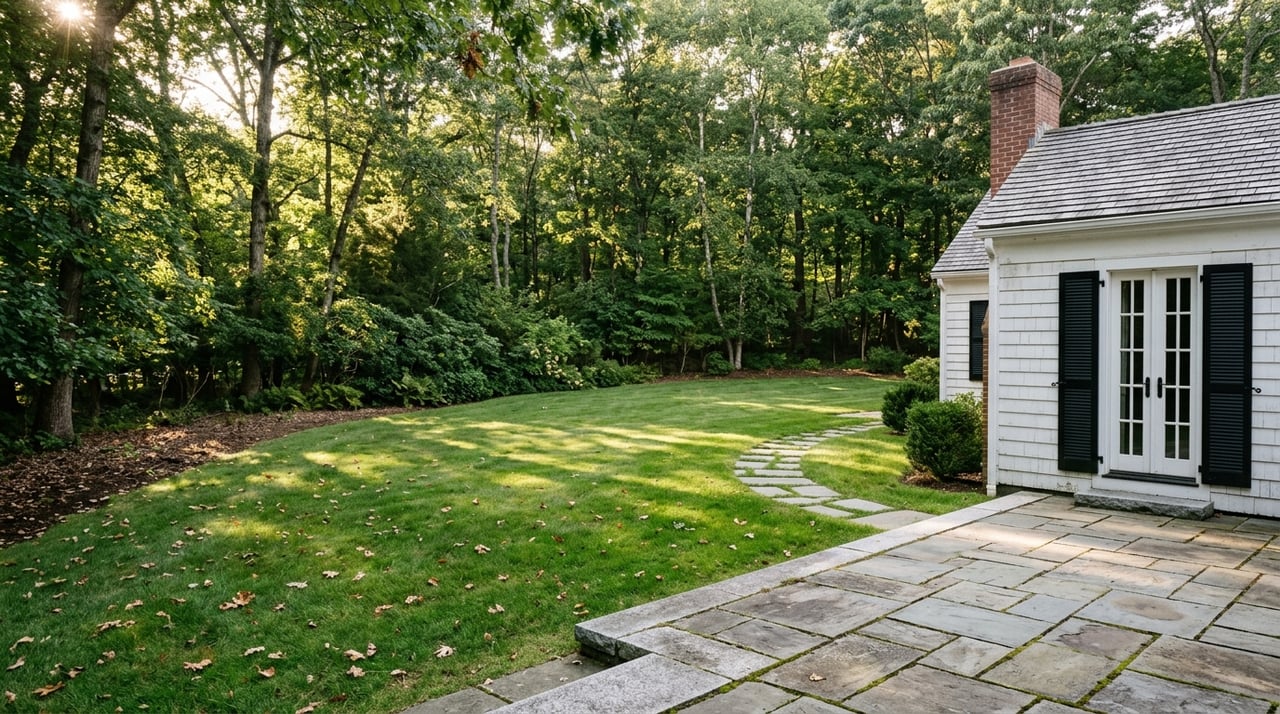
Dreaming about more land, more privacy, and a quieter pace of life? In Weston, that appeal is real, but larger lots come with practical tradeoffs that matter when you buy or sell. If you are considering a move to Weston or evaluating what makes a property there different, it helps to understand how lot size shapes daily life, upkeep, value, and long-term flexibility. Let’s dive in.
Why Weston Feels Like Country Living
Weston’s country feel is not an accident. The town describes itself as a residential community about 45 miles from New York City, with minimal commercial development and abundant natural open space. That combination helps create a setting that feels more rural than many nearby suburbs.
A big part of that character comes from land-use rules. Weston’s zoning code is built around a predominantly rural residential pattern, with a two-acre residential and farming district as its primary framework. In simple terms, the town’s spacious feel is shaped by policy as much as by scenery.
What Larger Lots Mean in Weston
Larger lots often mean more breathing room between homes. In Weston, that can translate to wooded buffers, longer driveways, and a stronger sense of separation from neighboring properties. For many buyers, that is a major part of the town’s appeal.
At the same time, a larger lot is not just extra land on paper. It can affect how you use the property, how much you maintain, and how carefully you need to review zoning and site conditions before making a decision. In Weston, those details matter.
Not Every Lot Is Exactly Two Acres
One of the most common assumptions about Weston is that every property sits on two acres. That is not quite right. Weston includes an R-2A Two-Acre Residential and Farming District, but it also has a separate Village District with different one-acre minimums.
There is another wrinkle that buyers and sellers should know. Minimum lot calculations can exclude or limit certain areas, including roads, rights-of-way, access ways, some easements, land under water, and very poorly drained soils. So even when a parcel is described by acreage, the usable or qualifying area may be different from what you expect.
Privacy Comes From More Than Acreage
Privacy in Weston is created by more than lot size alone. The town’s zoning goals specifically include privacy and avoiding overcrowding, and those rules work together with wooded topography and preserved land. That is why many Weston properties feel tucked away without being remote.
This distinction matters when you compare homes. Two lots with the same stated acreage may offer very different experiences depending on tree cover, layout, topography, and nearby protected land. In other words, the feeling of space is often just as important as the number on the listing sheet.
Open Space Shapes the Experience
Weston’s open land is a major part of its lifestyle appeal. Town materials estimate that roughly 28% to 29% of the town’s land is devoted to open space and recreation. That is a meaningful share of the landscape, and it helps preserve the town’s natural character.
You can see that in places like Lachat Town Farm, the dog park parcel, Devil’s Den, and Aspetuck Land Trust properties. The town describes Devil’s Den as the largest continuous preserve in Connecticut and the largest tract of protected land in densely developed Fairfield County. For homeowners, that preserved land helps support the quiet, green setting many people seek in Weston.
Protected Land and Private Stewardship
An important detail is that less than 10% of Weston’s open-space and recreation land is town-owned, according to a 2019 town workshop. That means conservation groups and private stewardship play a major role in preserving the town’s landscape. This helps explain why Weston can feel so consistently green across different parts of town.
For you as a buyer or seller, this reinforces the idea that Weston’s value is tied to its broader setting. A home’s lot matters, but so does the network of preserved land and low-density planning around it.
Daily Life on a Larger Lot
Country living has a rhythm of its own. In Weston, larger lots often mean you may spend more time thinking about landscaping, drainage, driveways, and seasonal upkeep than you would on a smaller suburban parcel. That is part of the tradeoff for having more room and a more private setting.
The town’s planning documents note that pools, paved areas, sports and recreation facilities, and manicured lawns can increase runoff and erosion. That means site planning is not just about aesthetics. It can also affect maintenance needs and how the property performs over time.
Expect a Car-Oriented Lifestyle
Weston is largely car-oriented. The town plan states there is no bus service in Weston, and earlier workshop materials reported that only 1% of residents walk or bike to work. If you are moving from a more walkable area, this is an important lifestyle shift to keep in mind.
That said, the town is investing in pedestrian improvements in the town center. It has completed about 5,500 linear feet of new sidewalk as part of its Community Connectivity Sidewalk Project, with related efforts aimed at traffic flow, pedestrian safety, and promoting walking. So while Weston is not transit-rich, the town center is seeing infrastructure that supports local access.
What the Commute Picture Looks Like
Weston is about 45 miles from New York City, and census data show a mean travel time to work of 46.6 minutes. That figure helps frame the town’s appeal for buyers who want a quieter residential setting while remaining connected to larger employment centers. It also reflects the practical reality that many residents rely on driving.
The same census snapshot shows a 96.9% owner-occupied housing rate and that 90.5% of residents lived in the same house one year earlier. Those numbers point to a stable housing pattern rather than a fast-turnover market.
What Buyers Should Watch Closely
If you are shopping for a home in Weston, lot size should never be your only filter. A parcel may look generous on paper, but topography, drainage, easements, and zoning status can shape what the property really offers day to day. This is especially true in a town where the land itself is such a central part of value.
The town’s documents highlight several issues that deserve careful review. Buildable area, drainage, topography, and whether a lot is conforming or legacy nonconforming can all affect your plans. A large parcel does not automatically mean easy expansion, recreation space, or long-term flexibility.
Acreage Does Not Equal Usable Land
Weston specifically notes that some land may remain undeveloped yet still be capable of subdivision, while other land may be unsuitable because of topography. That makes parcel-by-parcel due diligence essential. You want to understand not just how much land there is, but how that land functions.
This matters for future plans as well. If you are imagining an addition, outdoor amenities, or a different site layout, you need clarity on what is actually feasible before you move forward.
Future Subdivision Potential Matters Too
The town’s plan estimated 500 potential two-acre parcels from remaining unimproved or underdeveloped land. That does not mean every large property will change, but it is a reminder that acreage is not always the same thing as permanent protection. Some parcels may carry future subdivision potential unless restricted by zoning, easements, or conservation protections.
For buyers, this means asking good questions about surrounding land and the subject property itself. For sellers, it can be an opportunity to position a property more thoughtfully if there is flexibility or protected context worth understanding.
What Larger Lots Can Mean for Value
Weston remains a high-value market with limited supply. Census data show a median value of owner-occupied housing units of $996,700, while a February 2026 market snapshot showed a median home price of $1,497,500, with 21 homes for sale, 57 median days on market, and a balanced market. While those figures come from different methodologies, both suggest a relatively supply-limited, high-price market.
In that setting, larger lots can support value, but not all acreage contributes equally. Privacy, usable land, setting, and long-term certainty often matter more than a headline lot number alone. Buyers tend to respond to how a property lives, not just how it measures.
For sellers, that means presentation and positioning are important. A well-prepared home on a larger lot benefits when the property’s layout, landscape, and practical advantages are communicated clearly and accurately.
How to Think About the Tradeoff
Weston’s larger lots offer a clear lifestyle proposition. You get more space, a greener setting, and a stronger sense of privacy than in many nearby towns. You also take on more maintenance, more driving, and more need for property-specific due diligence.
That is not a downside so much as a fit question. If you value breathing room, natural surroundings, and a residential setting shaped by open space and low-density planning, Weston can deliver a distinctive version of country living in Fairfield County.
Whether you are buying your first Weston home or preparing to sell a property with significant land, the details behind the acreage matter. If you want clear, data-driven guidance on how to evaluate lot value, positioning, and market opportunity in Weston, Jillian Klaff can help.
FAQs
Are all residential lots in Weston two acres?
- No. Weston includes a two-acre residential district, but it also has a separate Village District with different one-acre minimums, and lot calculations can be affected by easements, roads, water, and soil conditions.
How much open space is in Weston?
- Town materials estimate that roughly 28% to 29% of Weston’s land is devoted to open space and recreation.
Is Weston a walkable or transit-oriented town?
- Weston is largely car-oriented, with no bus service noted in the town plan, though the town has added pedestrian improvements in the town center.
What should buyers review when considering a large lot in Weston?
- Focus on buildable area, drainage, topography, easements, and whether the lot is conforming or legacy nonconforming.
Can a large Weston parcel have future subdivision potential?
- In some cases, yes. The town has noted that some unimproved or underdeveloped land may still be capable of subdivision unless limited by zoning, easements, or conservation restrictions.