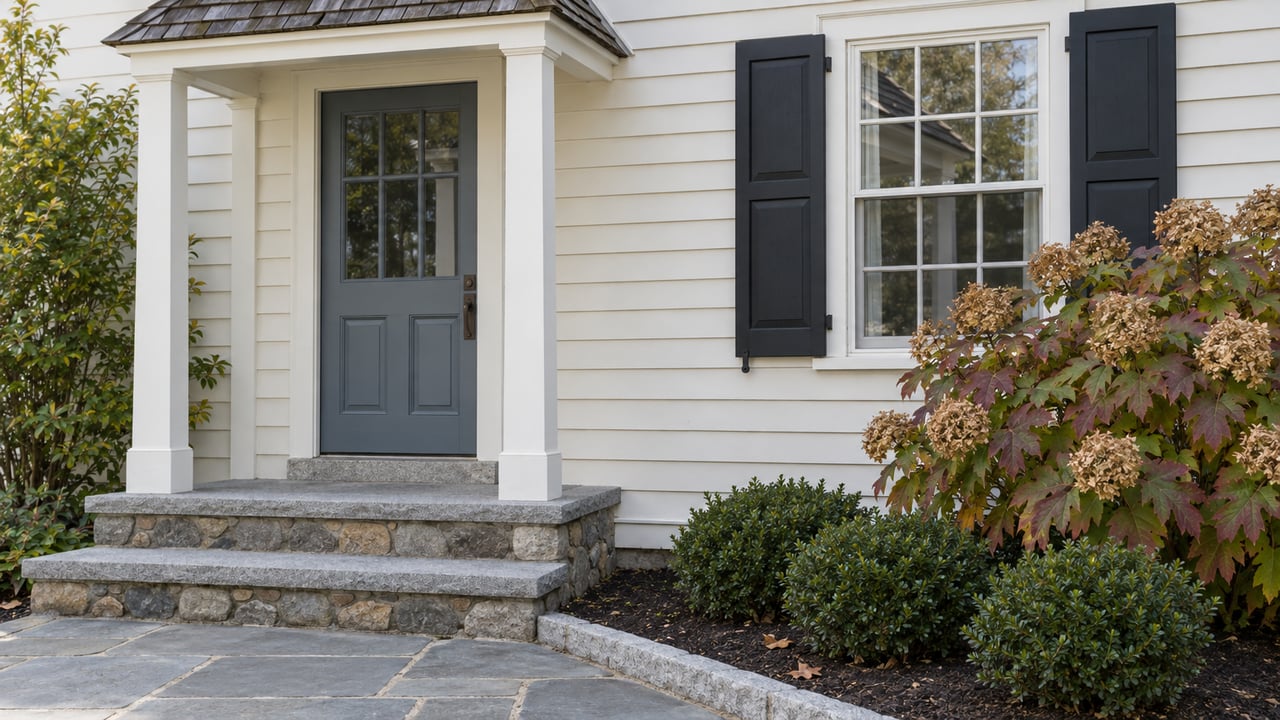
Walk down Pequot Avenue this month and you will pass a storefront with paper still taped over the glass, the kind of quiet that only means one thing in a village this small: something is about to change hands, and everyone already knows it. Southport has just over 1,700 residents. The commercial center you can actually walk to fits on a few blocks between the train station and the harbor. In a place that size, a business closing is not background noise. It is the thing three people mention to you before you've had your coffee.
That storefront is the old Spic & Span Market, a grocery that had been open in the heart of the village since 1928. Ninety-eight years at one address is not a footnote. It is most of Southport's modern history as a working village, from onion boats to the Delamar. This fall the space becomes the Southport General Store, arriving with two named tenants, Rose Hill Kitchen and Driftwood, in a building that has effectively had one identity since the Coolidge administration.
Later this same fall, on the other side of the village, Southport Congregational Church runs its 31st Rooms with a View, the design showcase that has occupied the same library and great hall every November since 1995. The theme this year is British design. The format has not changed since a designer named Albert Hadley invented it inside that same church three decades ago.
Neither of these is really about a store or a show house. Both are evidence of the same thing about how this village works, and it is worth naming directly: Southport does not get new commercial faces often, so when one appears, it is a real event rather than routine turnover, and this fall pairs that rare commercial arrival with the annual Rooms with a View.
The Corner That's Waited All Summer
The Spic & Span Market closing is the kind of change that would barely register in a bigger downtown, where storefronts flip every eighteen months without anyone noticing the name on the awning changed. In Southport, a market that opened in 1928 and lasted nearly a century at the same corner is closer to a landmark than a business. The Southport General Store taking its place, with Rose Hill Kitchen and Driftwood attached, is the first real change to that specific address in most residents' lifetimes.
The pitch for the new store, based on what's circulating locally, leans into exactly the kind of daily use the old market served: a place to grab what you need for a picnic before heading down to Perry's Green, the stretch of waterfront next to Pequot Yacht Club where watching sailboats go by has been a low-key local habit for as long as anyone can remember. That is not a new concept for the address. It is the same function the market always served, under a new name, with new ownership, after nearly a century of continuity.
What Actually Counts as New Here
If you want to understand how rarely storefronts change in Southport, it helps to look at what has not changed. The Horseshoe Café, known locally as The Shoe, started life as a blacksmith and farrier shop on Pequot Avenue around 1916. It has operated as a café since 1934, and the Fraser family has owned it since 1957, which means the same family has run the same building for 69 years. Paci, the Italian restaurant housed in the old freight depot at the train station, has been run by Chef Robert Patchen and his wife Donna since 1996, three decades under one kitchen. Artisan, at the Delamar, has been the village's go-to for a more formal evening out for years without a change in concept or ownership.
Here's what that continuity looks like laid out plainly:
| Business | In place since | Years running (as of 2026) |
|---|---|---|
| Horseshoe Café (as a café) | 1934 | 92 |
| Horseshoe Café (Fraser family ownership) | 1957 | 69 |
| Paci Restaurant | 1996 | 30 |
| Rooms with a View | 1995 | 31 |
| Spic & Span Market (now Southport General Store) | 1928 to 2026 | 98 |
Against that backdrop, another new arrival this year is G Cafe Bakery, a family-owned, European-style espresso bar and bakery that expanded into the village from its established outposts in New Haven. Even that is not a startup finding its footing. It is a bakery with a track record elsewhere choosing to add a Southport address, which is roughly what passes for a new business in a village where the historic district protects the buildings and the families protect the businesses inside them.
The Design Weekend That Never Left
Rooms with a View is the clearest example of how little the shape of things changes here, and how much that consistency is the point. Albert Hadley, the designer widely credited as one of the most influential figures in American interiors, had a home in Southport and helped found the event in 1995 after the church's longtime antiques show lost steam. The format he set has not moved since: twelve designers, each building a vignette inside a space measuring six by eight by eight feet, staged in the church's library and great hall.
This year marks the 31st edition, running November 6 through 8 at Southport Congregational Church on Pequot Avenue, with a theme built around the enduring influence of British design. The event has raised more than $2.1 million for local and regional charities since it started, and currently supports 19 organizations across the region. Christopher Philip, who owns Lattice House in the village center, has served as the event's executive director for the past six years, which means the same local shopkeeper has been steering the village's biggest design weekend for most of the decade.
None of this has needed reinvention. The building is the same. The format is the same. The charities being supported have grown but not shifted in kind. What changes, year to year, is the theme and the roster of twelve designers invited to interpret it, which is a small enough variable that regulars can spot the differences the moment they walk in.
A Rare Storefront Change and an Annual Event
Put the two side by side and the coincidence starts to look less like a coincidence and more like a pattern. A grocery store that outlasted most of a century finally changes hands the same season a design event marks 31 uninterrupted years in the same room. Neither is a sign that Southport is suddenly turning over faster. Together, they underscore the opposite: a rare storefront change stands out all the more beside a longstanding annual event.
In between the two, the rest of the season runs on the same fixtures it always has. Pequot Library, founded in 1889, keeps up its docent-led walking tours of the historic district through the fall, tracing the harbor, the old onion fields, and the taverns that once lined these same streets. The Horseshoe Café keeps pouring its rotating craft beer list. Paci's summer live music nights, a fixture regulars plan around, will start winding down as the weather turns. None of that is new news. It is simply what the season looks like here, and part of why the storefront change and the annual event stand out as much as they do.
If you have lived in Southport for any stretch of time, you already know the rhythm: long stretches of nothing changing, punctuated by the rare thing that does. This fall pairs a rare storefront change with the annual Rooms with a View, on either end of the village.
Southport's pace is part of what makes it Southport, and understanding that rhythm is useful well beyond knowing where to grab lunch or what weekend to keep open in November. If you are thinking about what a home here is actually worth, or what buying into a village with this little turnover means for your timeline, Jillian Klaff can walk you through it. Request a personalized market consultation whenever you're ready to talk specifics.