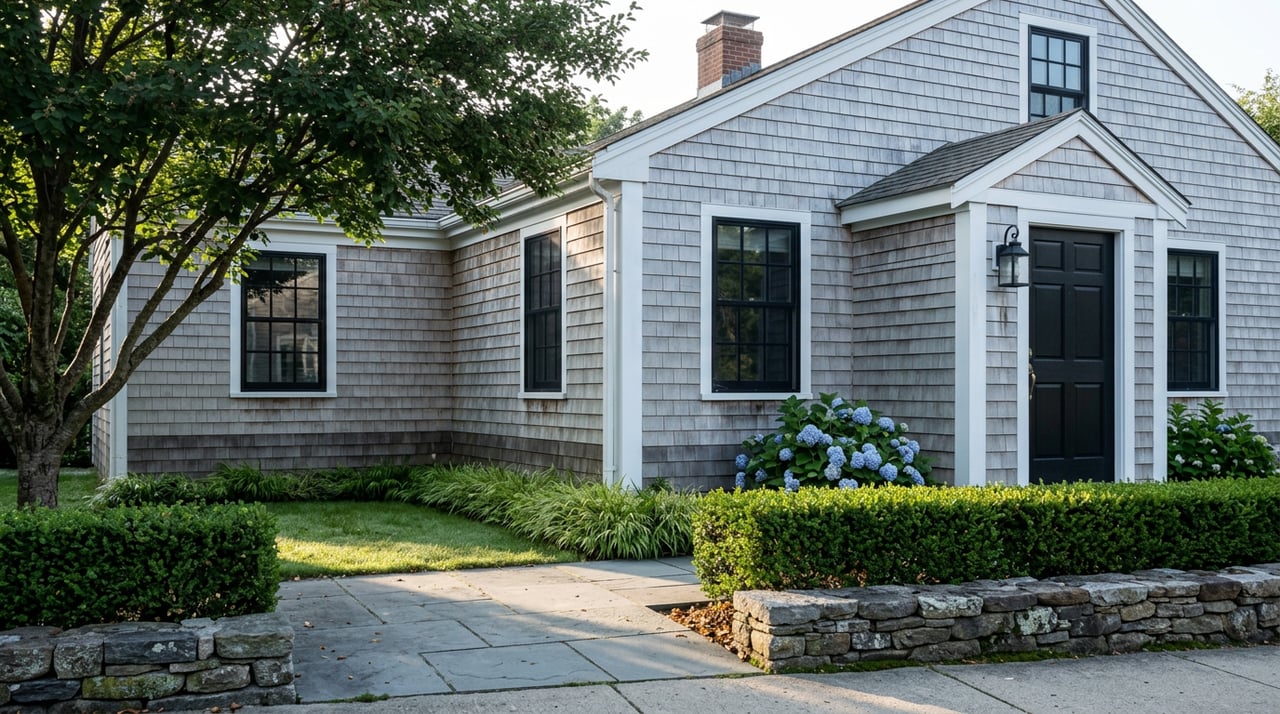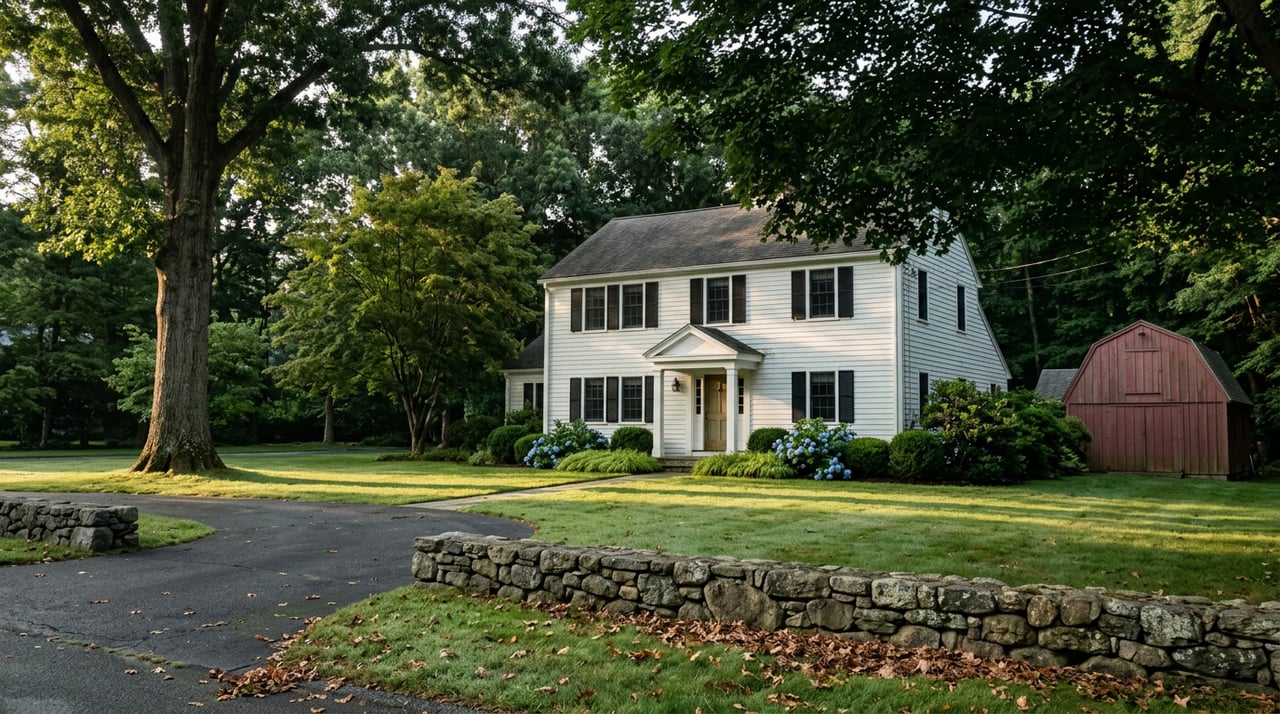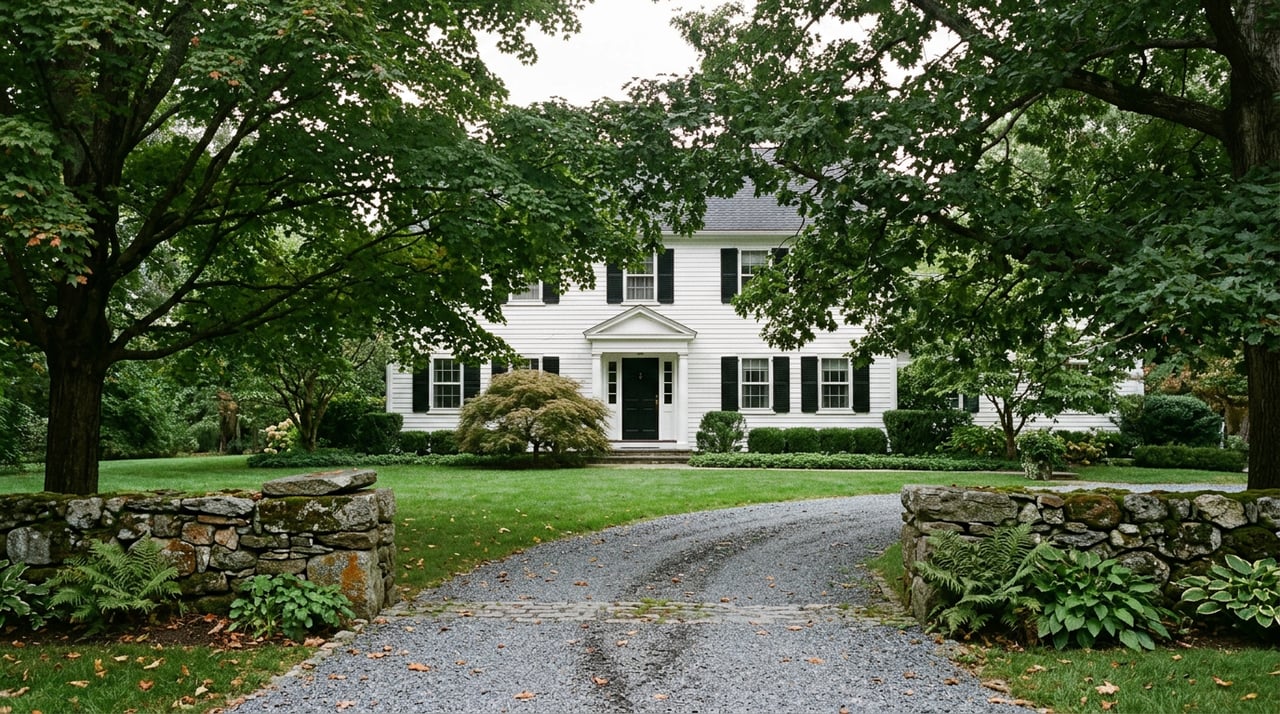
Drive any road north of the Merritt Parkway into Weston and the pattern repeats itself for miles. Stone walls. Deep setbacks. Homes that sit back from the road on lots that rarely dip below two acres, sometimes stretching past fifteen. There are no sidewalks because there was never a reason to build them, and there is no municipal water main under most of those roads because the town's zoning never called for one. That absence is the whole story. Weston's minimum two-acre lot requirement did more than protect open space. It meant the town never had to run public water and sewer to most of its housing stock, which means nearly every home here draws from a private well and drains to a private septic system.
That fact does not show up as a line item on a listing sheet. It shows up three weeks into a transaction, when a buyer's attorney asks a question the seller wasn't prepared for and the closing date starts to move.
Two Acres Bought Privacy. It Also Bought Three Systems to Verify.
A buyer moving from a town with municipal utilities is used to one clock: home inspection, mortgage commitment, closing. In Weston, that same buyer inherits two more clocks running in parallel, and neither of them cares about the date typed into the purchase contract.
The first clock belongs to the well and septic system itself. The second belongs to the state's disclosure paperwork, which changed meaningfully in 2025. The third belongs to whichever neighbors share your road, because a large share of Weston's rural lanes were never accepted as town roads and instead exist as private easements maintained, or not maintained, by informal agreement among the households that use them.
None of these three clocks is dramatic on its own. Together, they are the reason Weston closings slip past their original date more often than buyers moving from towns on public utilities expect.
The Aspetuck Health District Keeps the File Nobody Else Has
Septic and well permits in Weston are not handled by the town building department alone. They run through the Aspetuck Health District, the regional authority that also serves Easton and Westport and administers subsurface sewage disposal under the state's public health code. Every septic system in Weston was permitted through that office, and the file it holds, the site plan, the as-built drawing, the percolation test, the record of any repair, is the single most useful document a seller can pull before listing.
That file matters because septic capacity in Connecticut is sized to bedroom count, not bathroom count. A finished basement with a bedroom that was never added to the health district's permit does not show up as a problem during a showing. It shows up when a buyer's attorney compares the tax card to the septic design flow on file and finds a mismatch. At that point the question is no longer cosmetic. It becomes a question about whether the system as built can legally support the home as marketed.
Well testing runs on its own timeline too. A well is evaluated for yield, measured in gallons per minute, and for water quality, typically a panel covering coliform bacteria, E. coli, nitrate, and increasingly PFAS depending on site history. Samples have to go to a state-certified lab, and results take days, not hours. A home on municipal water and sewer can often clear its inspection contingency in three to five days. A home on well and septic routinely needs seven to ten, sometimes longer if a retest is required.
| Town water and sewer | Private well and septic | |
|---|---|---|
| Typical inspection window | 3 to 5 days | 7 to 10+ days |
| Lab dependency | None | Certified water lab required |
| Governing authority | Municipal utility | Aspetuck Health District |
| Design flow tied to | Not applicable | Permitted bedroom count |
That gap is not a Weston quirk. It is true statewide. What makes it a Weston issue is that it applies to nearly every listing in town rather than a handful.
The 2025 Disclosure Form Asks the Question Sellers Used to Skip
Connecticut's Residential Property Condition Report, the form every seller must hand a buyer before a contract is signed, was revised in 2025 and now runs nine pages with sixty five questions. The expanded form pushes harder on exactly the details that used to get glossed over: water source and testing history, septic type and last pumping date, and whether any addition or conversion changed the home's actual bedroom count.
The practical effect for Weston sellers is that vague answers cost more than they used to. Checking "unknown" on a question about septic design flow used to be a shrug. Now it is more likely to trigger the kind of follow-up request that adds days to a transaction rather than closing it out. Sellers who pull their Aspetuck Health District file before listing, rather than after an attorney asks for it, answer these questions with documentation instead of guesswork.
The Road That Was Never Written Down
The third clock is the one buyers almost never see coming, because it has nothing to do with the house.
Connecticut passed a law in 2014, Public Act 14-67, that assigns the cost of maintaining a private road to the homeowners who use it, splitting the expense according to a written agreement if one exists, or proportionally by benefit if it does not. The law exists in part to satisfy Fannie Mae's underwriting requirement that a private road have a documented maintenance plan before a loan can close, since states with a statutory framework like Connecticut's can qualify for that requirement automatically.
The catch is that the statute only works cleanly when a written agreement is already recorded on the land records. When it is not, the lender's underwriter still wants to see something in writing, and pulling that together after an offer has already been accepted is a scramble. Just over the town line in Westport, which shares Weston's stock of older rural lanes, one local attorney estimated in a 2011 report that as many as 98 percent of the town's private roads had no written agreement at all. Weston was built along the same pattern of unpaved and undedicated lanes, and there is no reason to expect its share of undocumented roads looks meaningfully different.
A seller on a private road who waits for the buyer's lender to ask the question is negotiating from a weaker position than a seller who already has a signed, recorded agreement in hand.
A Pre-Listing Sequence That Front-Loads All Three Clocks
- Request the Aspetuck Health District's scanned property file for the address, including the as-built septic drawing, permit history, and any repair record.
- Compare the permitted bedroom count on that file against the home's actual bedroom count, including any finished space that was never formally added.
- Check the deed and title report for a recorded private road maintenance agreement. If none exists, start the conversation with neighbors early rather than after an offer is signed.
- Schedule well yield and water quality testing through a Connecticut DPH-certified lab before the home goes live, so results are already in hand when a contingency period opens rather than starting the clock from zero.
Handled in that order, before the sign goes in the yard, all three systems read as documented rather than discovered. Handled after an offer, each one becomes a reason for a buyer's attorney to ask for more time.
FAQ
Does this apply to every home in Weston, or just the more rural parts of town? It applies to the large majority of single-family homes, since two-acre zoning kept municipal water and sewer from reaching most of the town's housing stock. A handful of properties closer to the town center may be on shared or public systems, which is worth confirming with the Aspetuck Health District directly rather than assuming.
If my septic system has never failed, do I still need to worry about the design flow question? Yes. A system can function perfectly well day to day and still show a mismatch between its permitted design flow and the home's actual bedroom count on paper. That mismatch is a paperwork problem, not necessarily a performance one, but it is exactly the kind of gap the revised disclosure form is built to surface.
What if my road has an informal, unwritten understanding with neighbors that has worked fine for decades? An informal understanding can work for years between neighbors and still fail to satisfy a lender's underwriting file. Getting that understanding onto paper and recorded on the land records before listing removes a variable that otherwise surfaces at the worst possible moment in a transaction.
Selling a home with a well, a septic system, and a private road is not more complicated than selling any other Weston property. It just runs on three clocks instead of one, and the sellers who get ahead of all three are the ones whose closings actually happen on the date everyone agreed to. If you are weighing a sale in Weston and want a clear read on where your property stands on each of these fronts, Jillian Klaff Homes offers a personalized market consultation to walk through your specific file before it becomes a buyer's question.