A home library can be one of the most satisfying “small luxury” projects, as it changes the way a home feels day-to-day. It can be a calm corner for early mornings, a cozy place to unwind after work, or a flexible room that doubles as a study when needed. In Westport, where homes often have adaptable layouts and a strong appreciation for well-designed interiors, a library can feel especially natural. The best results come from designing around real habits, not a photo-perfect idea. If you are figuring out how to build a home library that you will genuinely enjoy, start with function first, then layer in comfort and style.
Pick a Space That Fits Your Routine
The most important decision is where the library will live. The “right” room is the one you will actually use. A spare bedroom can offer privacy and quiet. A den can be a natural fit if it already serves as a retreat space. A landing or loft can work well if you like being near household activity. Even a wide hallway or a corner of a living room can be transformed into a library if it has sufficient wall space and good lighting.
Before you commit, consider the noise level at different times of day. If you read mostly in the evening, choose a spot that feels calm once dinner is over. If you read in the morning, natural light and easy access may matter more than total privacy.
Before you commit, consider the noise level at different times of day. If you read mostly in the evening, choose a spot that feels calm once dinner is over. If you read in the morning, natural light and easy access may matter more than total privacy.
Decide What You Want the Library to Do
A library can mean different things depending on the home. Some homeowners want a true reading room that feels quiet and separate. Others want a library wall that adds warmth to a family room. Some want a hybrid space that also functions as an office, music room, or homework zone.
Clarifying the purpose will guide every choice. If the space is meant to be quiet, you may prioritize acoustics, softer materials, and closed storage. If it is a family space, you may focus on durability, lower shelves, and flexible seating. If it is a mixed-use room, you may need both display and practical storage to keep the room feeling calm even when it is busy.
Clarifying the purpose will guide every choice. If the space is meant to be quiet, you may prioritize acoustics, softer materials, and closed storage. If it is a family space, you may focus on durability, lower shelves, and flexible seating. If it is a mixed-use room, you may need both display and practical storage to keep the room feeling calm even when it is busy.
Build Shelving That Works for Your Collection
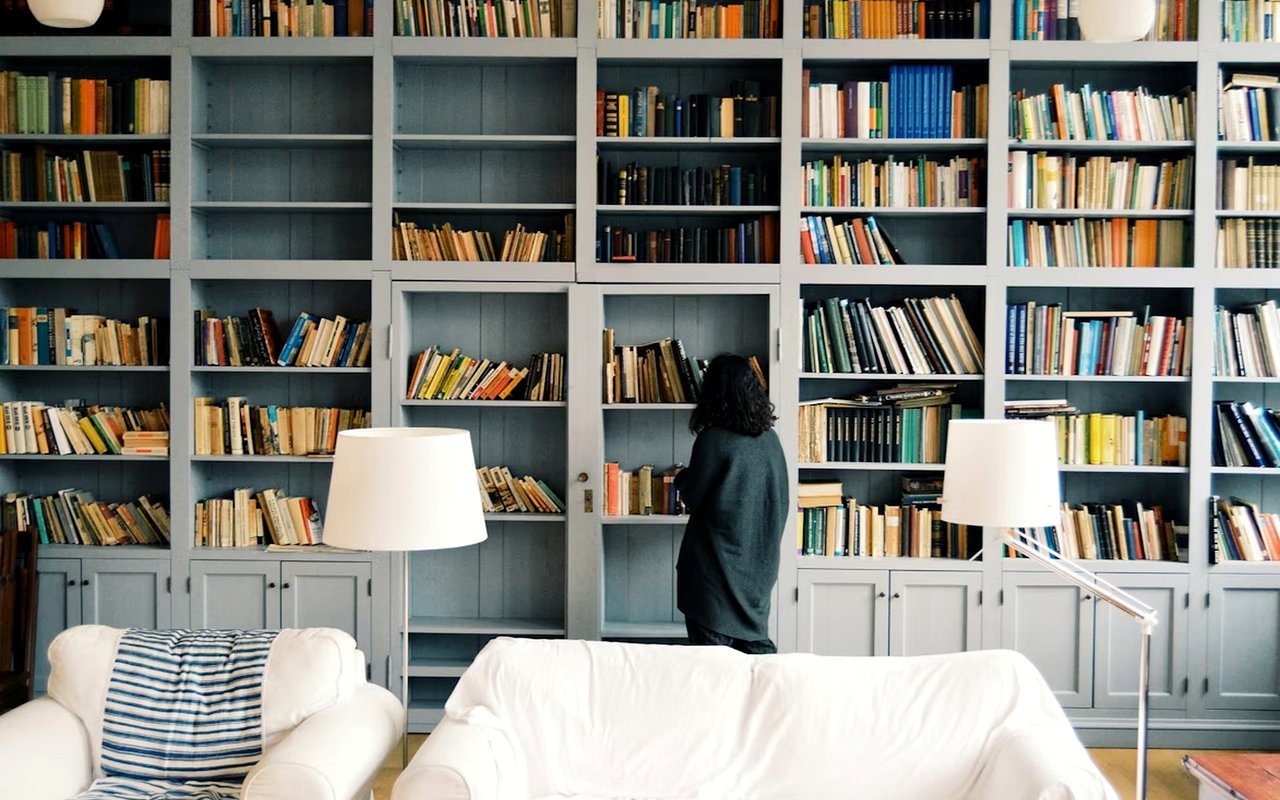
Shelving is the foundation of how to build a home library, but it should be planned around what you actually own. If your collection includes oversized art books, you will need deeper shelves and more height between them. If you have mostly paperbacks, slimmer shelves may be enough. If you collect series or have children’s books, you may want a mix of shelf heights and accessible lower sections.
Built-in shelves offer a clean, custom look and can maximize wall space, especially in rooms with odd angles. Freestanding bookcases provide flexibility and are easier to change later. A good middle ground is modular shelving that can expand as your collection grows. No matter the approach, leave some open space. A library that is packed too tightly can feel visually heavy and harder to maintain.
Built-in shelves offer a clean, custom look and can maximize wall space, especially in rooms with odd angles. Freestanding bookcases provide flexibility and are easier to change later. A good middle ground is modular shelving that can expand as your collection grows. No matter the approach, leave some open space. A library that is packed too tightly can feel visually heavy and harder to maintain.
Make Organization Easy to Keep Up With
The best organizational system is the one you will stick with. Some people like alphabetical order by author. Others prefer categories such as fiction, nonfiction, cooking, travel, and children’s books. Some organize by color for a cohesive look, but that can be hard to maintain if you add books regularly.
A simple approach is to organize by category first, then refine within each section if you enjoy that level of detail. Keep your most used books at eye level and store less-used items higher or lower. If you want the shelves to feel curated, mix horizontal stacks with vertical rows, but do it sparingly so it still feels functional rather than styled.
A simple approach is to organize by category first, then refine within each section if you enjoy that level of detail. Keep your most used books at eye level and store less-used items higher or lower. If you want the shelves to feel curated, mix horizontal stacks with vertical rows, but do it sparingly so it still feels functional rather than styled.
Choose Seating That Makes Reading Feel Effortless
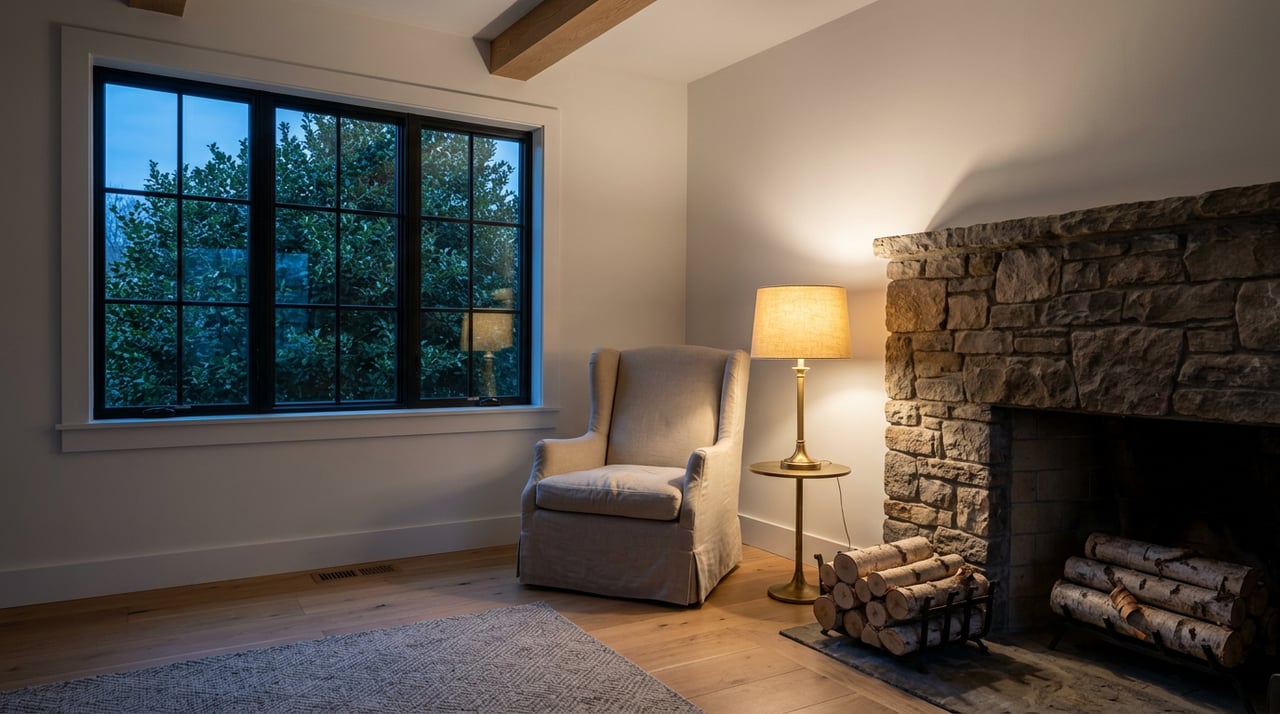
A library lives or dies by its seating. If the chair is uncomfortable, the room becomes decorative instead of useful. Look for supportive cushions, an arm height that works for holding a book, and enough depth to sit comfortably for longer stretches. If you like to lounge, consider a chair with an ottoman or a chaise-style seat.
If space allows, add a second seat. A small loveseat or an additional chair makes the room feel welcoming and useful when someone else wants to join you. Even a simple bench can provide flexible seating and work well if the room doubles as a study.
If space allows, add a second seat. A small loveseat or an additional chair makes the room feel welcoming and useful when someone else wants to join you. Even a simple bench can provide flexible seating and work well if the room doubles as a study.
Layer Lighting for Function and Mood
Lighting is often what separates a beautiful library from one that is truly usable. Relying solely on overhead lighting can create glare, shadows, or a harsh atmosphere in the evening. Start with a strong ambient source, then add task lighting where you read. A floor lamp beside a chair or a table lamp on a side table can make a huge difference.
If you have built-ins, subtle shelf lighting can add warmth and highlight the collection without feeling theatrical. Dimmer switches are also worth considering because they let the room shift from bright and practical to calm and cozy, depending on the time of day.
If you have built-ins, subtle shelf lighting can add warmth and highlight the collection without feeling theatrical. Dimmer switches are also worth considering because they let the room shift from bright and practical to calm and cozy, depending on the time of day.
Make Room for More Than Books
A library often feels richer when it includes a few personal elements. Art, framed photos, or a small object collection can add character and prevent the shelves from feeling monotonous. The key is restraint. A few meaningful pieces are better than filling every empty corner.
If the library also functions as a workspace, consider a compact writing desk or a narrow table that fits naturally into the room. Keep the surface uncluttered so the room still reads as a retreat rather than an overflow office.
If the library also functions as a workspace, consider a compact writing desk or a narrow table that fits naturally into the room. Keep the surface uncluttered so the room still reads as a retreat rather than an overflow office.
Plan for Growth and Maintenance
Most collections grow over time, so leave some space on the shelf for future additions. If you are installing built-ins, consider adjustable shelves for flexibility. Think about how easily the space will be to dust and maintain. Deep shelves can look beautiful but are harder to keep clean, especially if they collect décor items.
A small routine helps keep the room enjoyable. A basket for current reads, a place for bookmarks, and a clean side table for a drink can make the space feel lived in without feeling messy.
A small routine helps keep the room enjoyable. A basket for current reads, a place for bookmarks, and a clean side table for a drink can make the space feel lived in without feeling messy.
A Library Can Add Lifestyle Value in Westport
While a library is often a personal project, it can also be a feature that appeals to future buyers. In Westport, flexible spaces are valuable, and a well-designed library can signal that the home has been cared for thoughtfully. Even a simple built-in wall with a reading nook can elevate the way a home shows and how it is remembered after a tour.
Finding a Home That Supports the Way You Want to Live
Some buyers want a home that already includes a dedicated reading room, while others need the right layout to create one over time. Jillian Klaff helps clients in Westport, CT, evaluate homes through a lifestyle lens, looking at floor plans, bonus rooms, and design potential alongside market value and timing. With a grounded approach and local insight, she helps buyers and sellers make informed decisions that align with both their daily routines and long-term goals. If you are planning a move and want guidance tailored to Westport, reach out to Jillian Klaff today.
*Header image courtesy of Unsplash
*Header image courtesy of Unsplash