10,396 people live in Weston, where the median age is 45.7 and the average individual income is $127,002. Data provided by the U.S. Census Bureau.
Total Population
Median Age
Population Density Population Density This is the number of people per square mile in a neighborhood.
Average individual Income
Weston is the Fairfield County town buyers come to when they want space, privacy, and one of Connecticut's best school districts without paying coastal Westport prices. With two-acre minimum zoning, almost no commercial development, and nearly a third of its land permanently preserved, Weston feels rural while sitting just minutes north of Westport's trains, beaches, and restaurants. This guide covers what daily life, homes, and ownership look like here so you can decide whether Weston fits.
Roughly 10,500 residents live across Weston's 20-plus square miles, which works out to one of the lowest population densities in lower Fairfield County. There's no downtown, no train station, and no chain retail. Instead you get winding roads lined with stone walls, homes set back on wooded acreage, and a small civic core where the schools, library, Town Hall, and shopping center all sit within a short drive of one another.
Life here is car-dependent and centered on the schools, the outdoors, and community events. Most residents run errands in Westport, Wilton, or Ridgefield, 10 to 15 minutes away. The trade is deliberate: you give up walkability and convenience in exchange for quiet, acreage, and protection from overdevelopment.
Weston is a low-inventory, single-family seller's market. Demand comes largely from hybrid commuters and families relocating from New York City and neighboring coastal towns who want more land and house for their budget.
Market Metric | Figure | Notes |
|---|---|---|
Typical Home Value (Zillow) | ~$1.40M | Up 6.8% year over year (Oct 2026) |
Median Sale Price | $1.60M – $1.70M | Varies with seasonal sales mix (Oct 2026) |
Median List Price | $1.55M – $1.70M | Average homes run 4,000+ sq ft |
Active Inventory | ~43 – 55 homes | Renovated homes often sell near or above asking |
Days on Market | 47 – 59 days | Steady turnover for upper-tier properties |
Rentals | $4,950 – $9,000/mo | Fewer than 20 active listings town-wide |
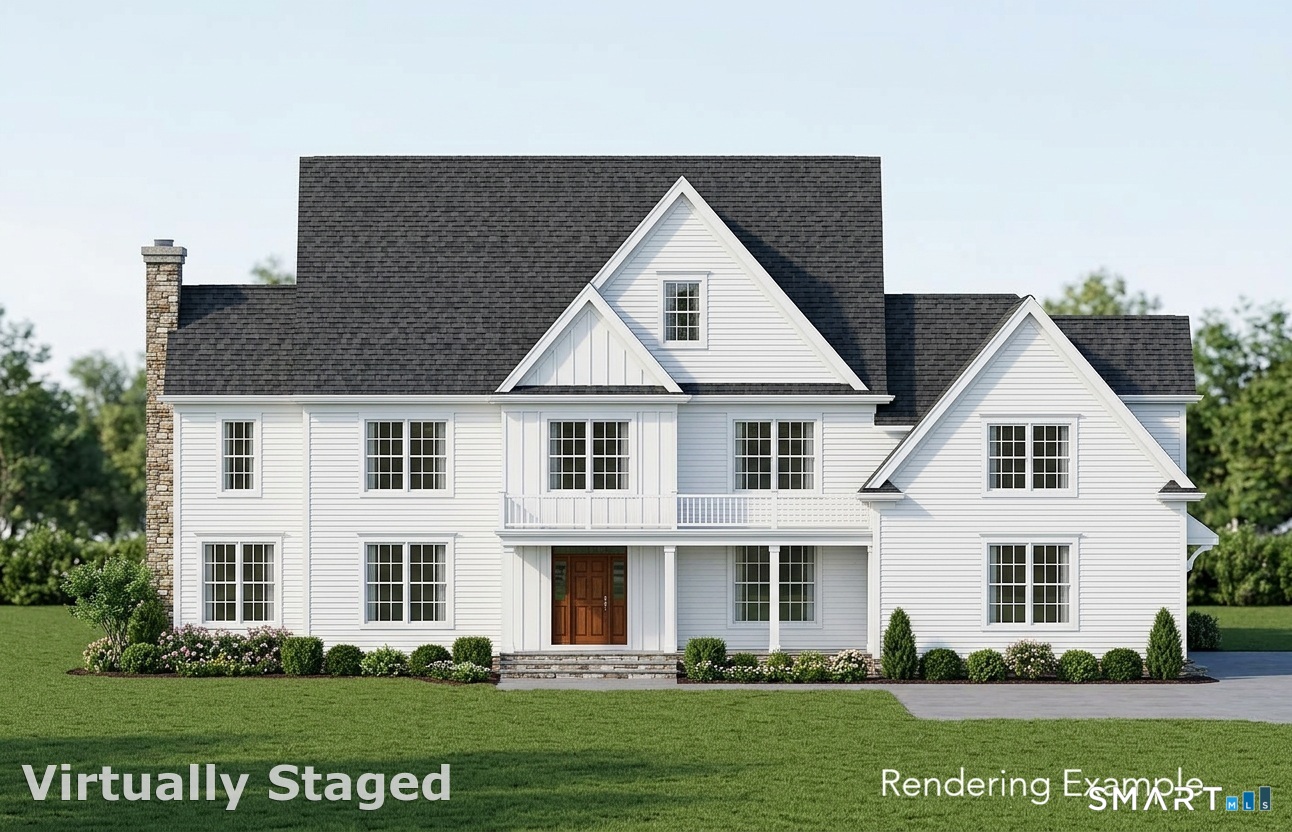
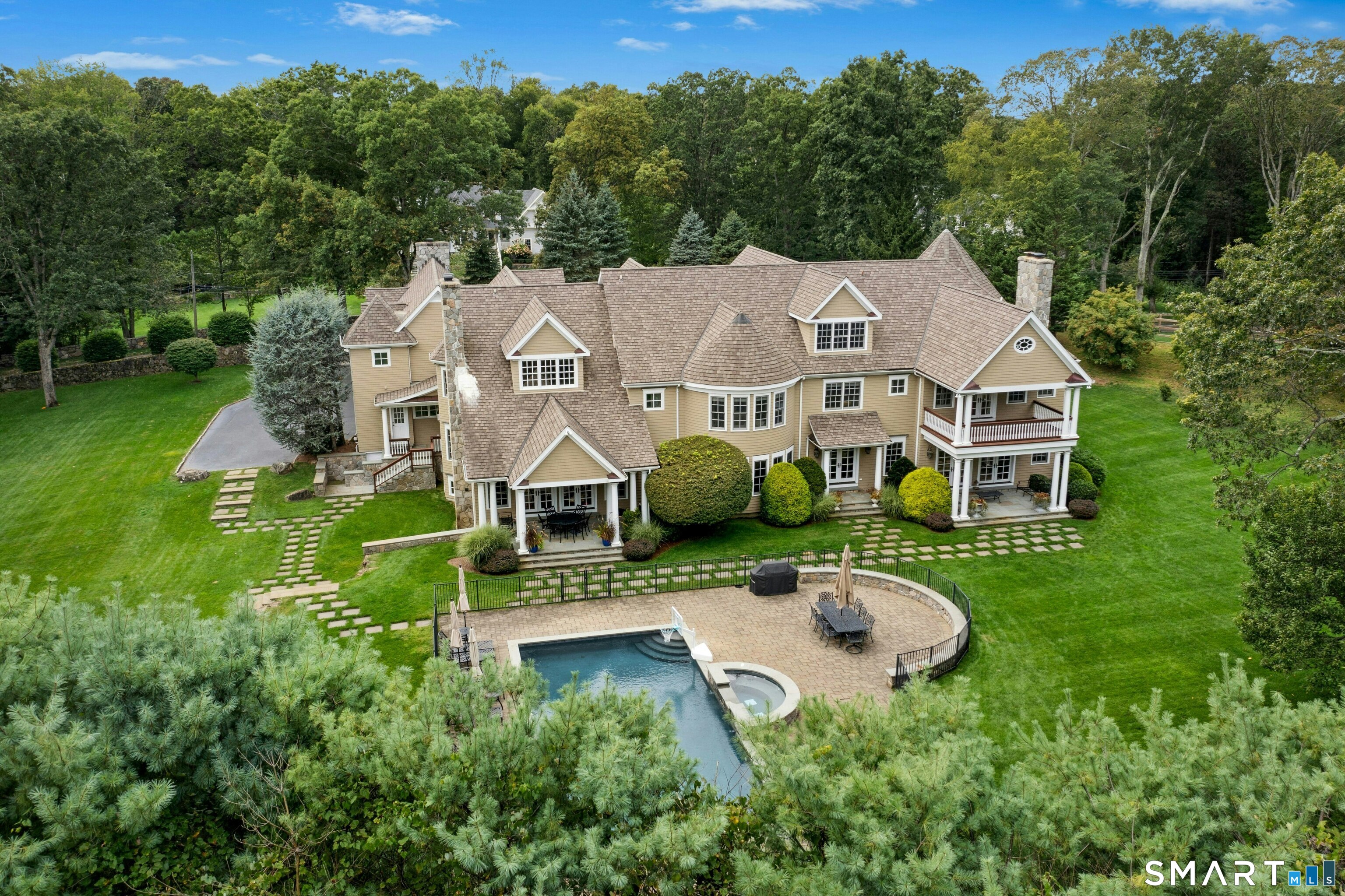
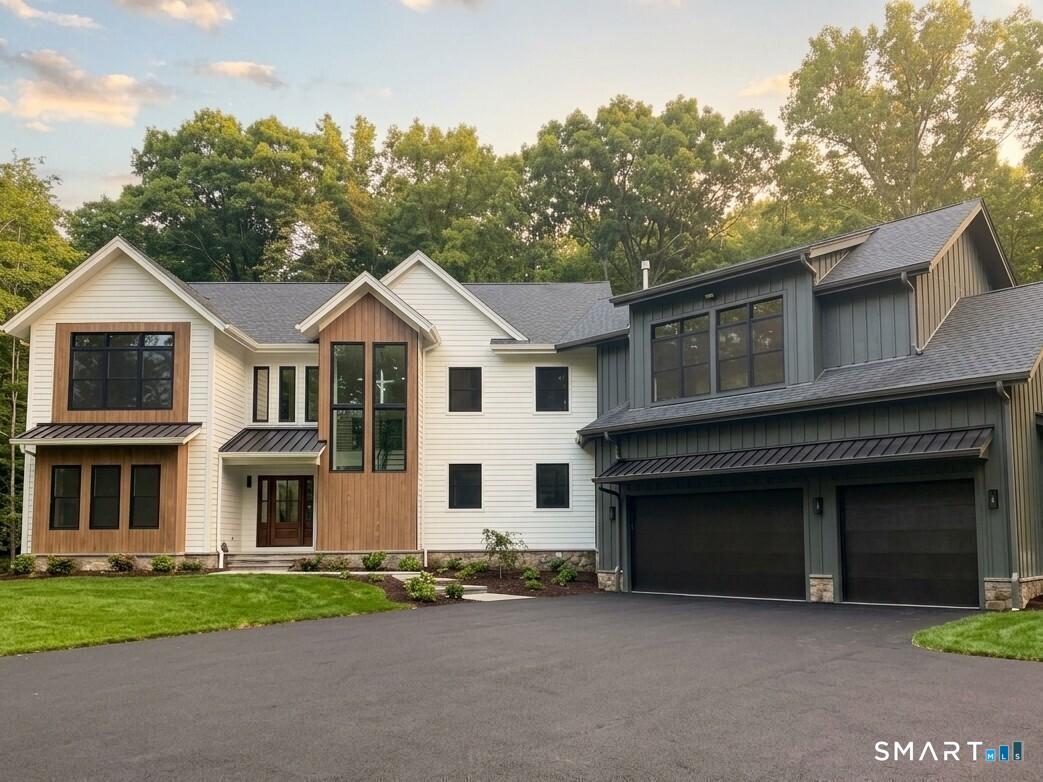
Prices fall into three clear tiers. Entry-level homes ($850K to $1.15M) are usually 1950s to 1970s ranches, split-levels, and colonials on two-acre lots that need updating. The turnkey mid-market ($1.3M to $2.2M) is renovated four- and five-bedroom colonials and mid-century contemporaries on two to four acres, often with pools. Upper-tier estates ($2.5M to $5M+) include custom stone-and-shingle homes and equestrian properties on four to 15+ acres, concentrated in the Aspetuck Valley.
A note on taxes: Weston's mill rate of 30.59 looks high next to its neighbors, but because home prices are lower, actual annual tax bills are often comparable to or lower than surrounding towns.
Town | Median Single-Family Price | Mill Rate | Minimum Lot Size | Direct Train to Grand Central |
|---|---|---|---|---|
Weston | ~$1.4M – $1.6M | 30.59 | 2.0 acres | No (10–15 min to Westport) |
Westport | ~$2.05M | 18.86 | ~0.5 acres | Yes (~70 min) |
Wilton | ~$1.36M | 29.68 | ~1.0 acre | Branch line (~75–85 min) |
New Canaan | ~$1.85M | 16.14 | ~0.5 acres | Branch line (~65 min) |
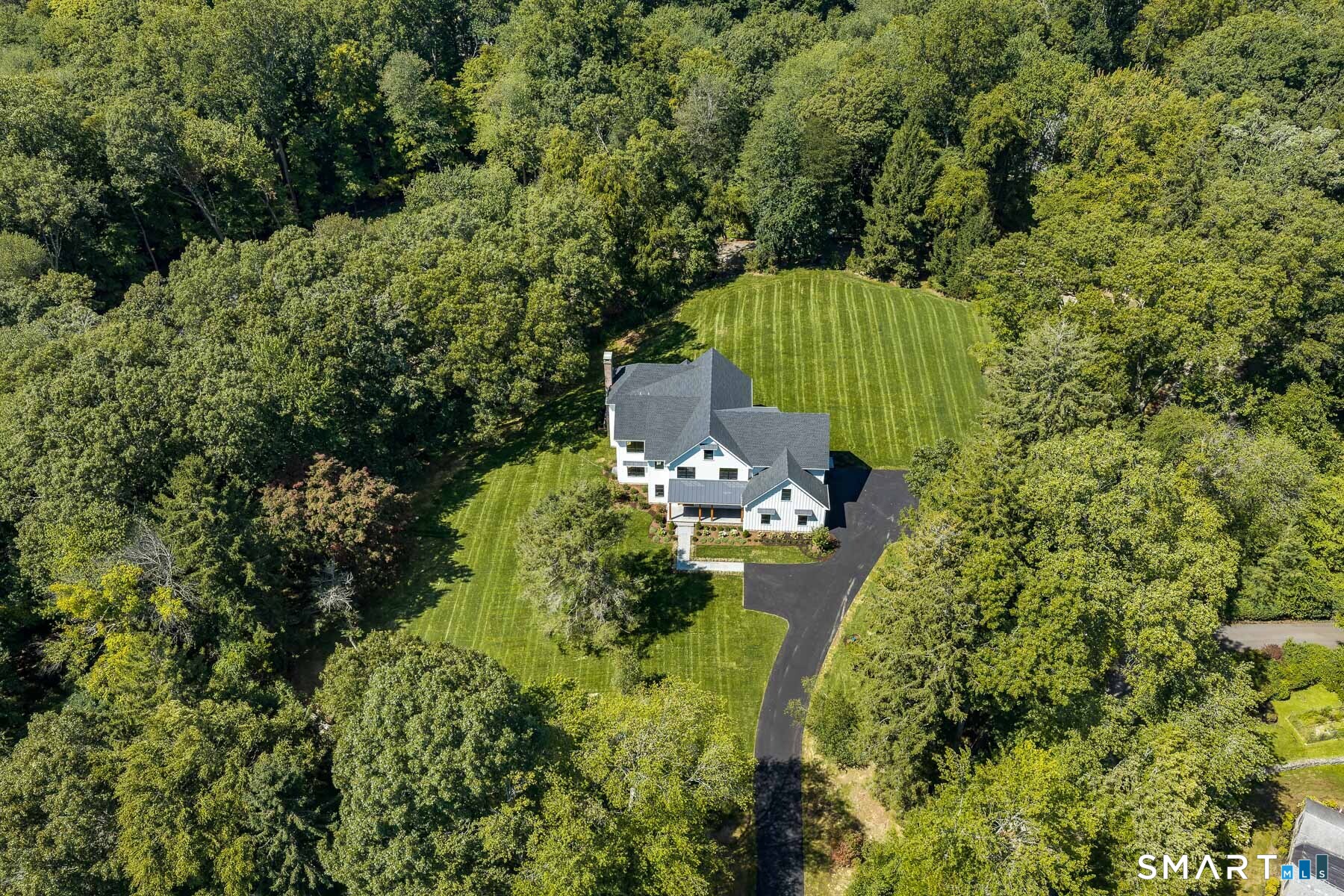
Weston's housing reflects three eras: 18th-century farming roots, mid-20th-century suburban growth, and today's custom construction. Because of the zoning, you won't find tract subdivisions. Homes are spread out along wooded roads, many down long private driveways.
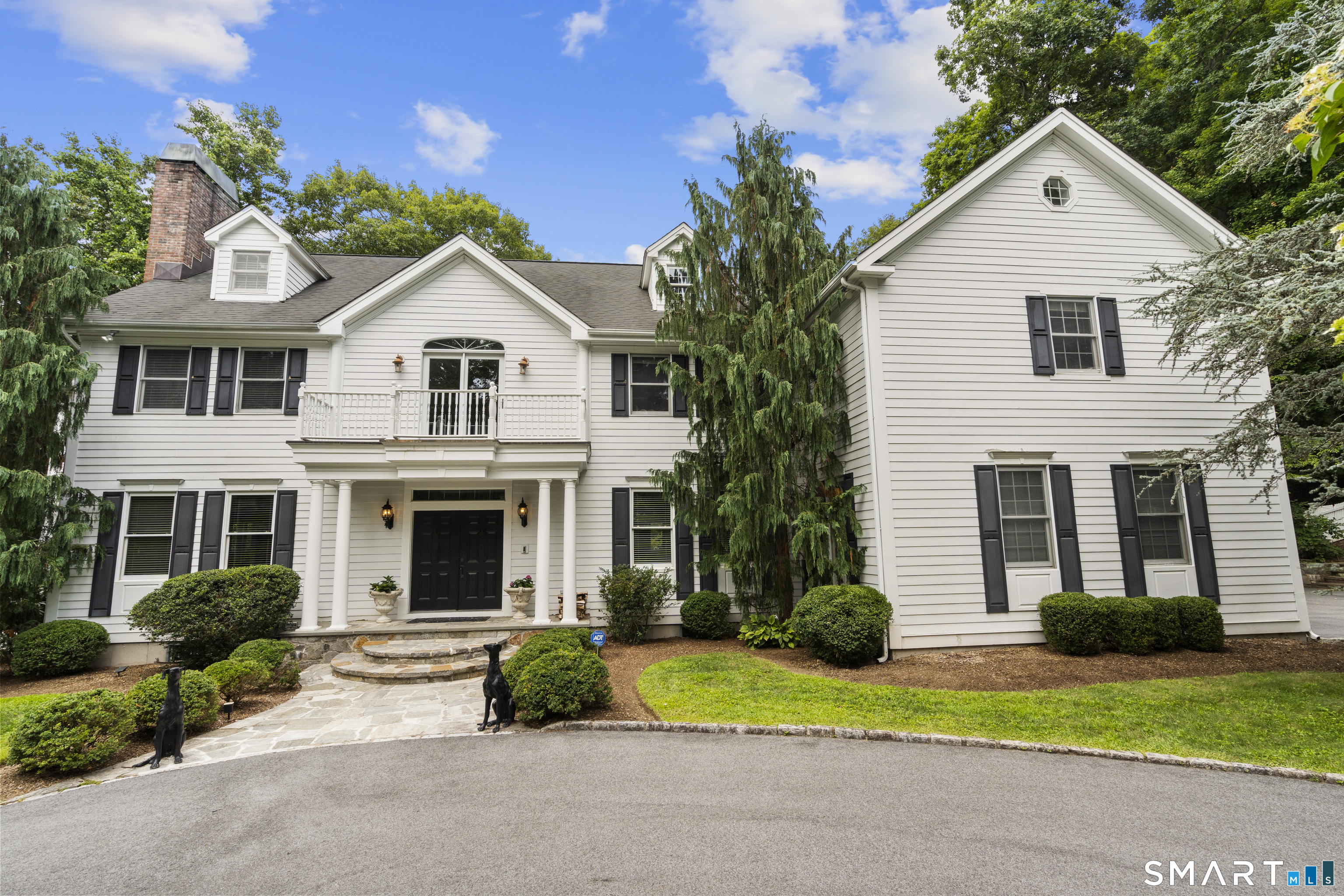
Center-hall colonials are the most common style, built from the 1960s through the 1990s and in newer custom work. Expect symmetrical facades, clapboard or cedar shingle siding, and large rear decks or stone patios overlooking the woods.
Mid-century modern and contemporary homes are a Weston signature, influenced by the modernist movement in nearby New Canaan and Westport. These 1950s to 1970s homes feature low-sloped rooflines, floor-to-ceiling glass, post-and-beam ceilings, and fieldstone fireplaces designed to blend into the rocky terrain.
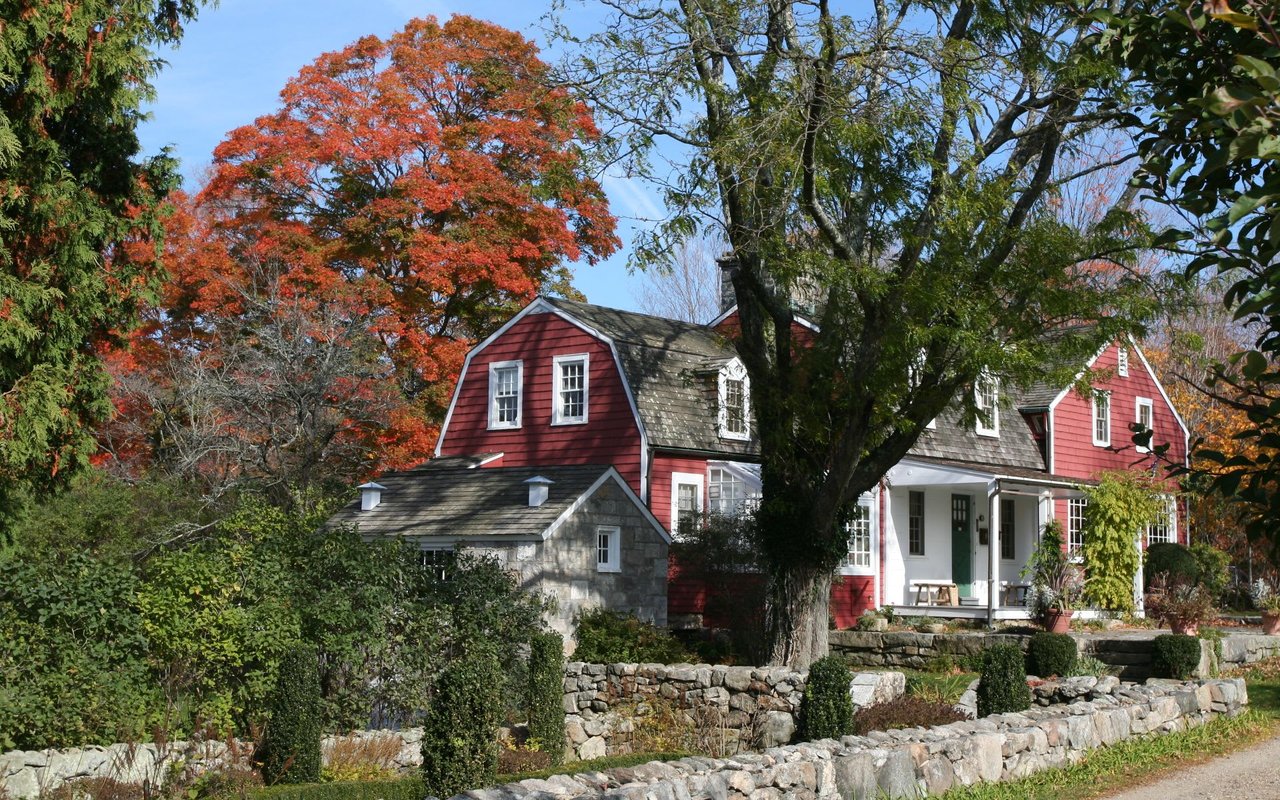
Antique farmhouses and saltboxes survive along older corridors like Weston Road and Norfield Road. Many 18th- and 19th-century Colonial, Federal, and Greek Revival homes have been expanded with sympathetic additions while keeping wide-plank floors and hand-hewn beams.
Ranches and split-levels from the 1950s and 1960s make up much of the entry-level inventory. Buyers often purchase them for the two-acre lot and renovate or expand.
Custom shingle-style and stone estates dominate the upper tier, including Georgian estates and converted barns with wraparound porches, guest cottages, and pools.
Weston has no formal neighborhoods or HOA subdivisions. Residents identify areas by historic parish names, river valleys, and proximity to neighboring towns. Where you buy within Weston affects your commute, your lot size, and your price point.
Section | Character | Lots and Pricing |
|---|---|---|
Weston Center / Norfield | Civic heart near Routes 57 and 53; Town Hall, library, shopping center, Norfield Historic District, school campus | Mostly 2-acre lots; Colonials and antiques; $950K – $2.5M |
South Weston / Lyons Plains | Borders Westport along the Saugatuck River; most popular with NYC commuters | 2–4 acres; mid-century moderns, renovated Colonials, riverfront homes; strong resale |
Aspetuck Valley | Eastern section near Easton and Fairfield; meadows, horse farms, stone walls | Estate and equestrian territory; 4–15+ acres; $1.5M – $6M+ |
Georgetown (Weston side) | Northwest corner near Wilton and Redding; next to Georgetown village | Rustic 2-acre lots; $800K – $1.6M; quick access to Cannondale and Branchville stations |
Devil's Den / Valley Forge | North and northeast, near Redding and Saugatuck Reservoir | Rugged, forested terrain; homes backing onto conservation land and trailheads |
If commuting to Manhattan is a priority, South Weston deserves first look. If you want horses or serious acreage, focus on Aspetuck. Buyers stretching their budget often find value on the Georgetown side.
Weston has no Metro-North station or bus network, so every commute starts with a drive. Most NYC commuters head 10 to 25 minutes south to Westport's stations on the New Haven Line, where express trains reach Grand Central in about 50 to 70 minutes. Door to door, plan on 65 to 95 minutes.
Station | Line | Drive from Weston | Train to Grand Central | Consideration |
|---|---|---|---|---|
Westport (Saugatuck) | New Haven Line | 10–25 min | 50–70 min | Direct express; permit waitlists |
Greens Farms | New Haven Line | 15–25 min | 55–70 min | Convenient for southern and eastern Weston |
Wilton / Cannondale | Danbury Branch | 10–20 min | 75–90 min | Easier parking; usually a South Norwalk transfer |
South Norwalk | New Haven Line | 20–30 min | 45–60 min | Frequent express trains, larger garages |
Parking is the real planning issue. Westport resident permits carry waitlists, so hybrid commuters often rely on limited daily-pay spots, drop-offs, or rideshares. By car, Routes 53, 57, and 107 connect to the Merritt Parkway and I-95. Midtown Manhattan is about 52 miles, roughly 75 minutes off-peak, though rush-hour traffic makes the train more predictable.
More than 1,700 acres of forest give Weston some of the best outdoor access in Fairfield County. Beyond Devil's Den (covered below), the Aspetuck Land Trust maintains interconnected preserves across Weston, Easton, and Redding. The Freeborn Walk Trail links hikers and riders to the Crow Hill and Trout Brook Valley networks, with mountain biking allowed in designated adjoining sections.
For everyday recreation, Bisceglie-Scribner Park is the town's hub, with a spring-fed swimming pond and sandy beach, playground, picnic areas, walking paths, and pickleball courts. Morehouse Farm Park and Keene Park host playing fields, ball diamonds, and tennis courts for youth and adult leagues. Dog owners have a dedicated 36-acre town parcel at Lords Highway East and Davis Hill Road with off-leash wooded trails, a useful option since dogs aren't allowed at Devil's Den.
Weston began as Norfield Parish in the mid-1700s and incorporated in 1787. Its history is preserved at the Weston History & Culture Center, set on the 3.7-acre 1841 David Dimon Coley Homestead on Weston Road. The site includes the restored house, a "Weston at Work" exhibit of farming and mill tools in an 1883 barn, an archive, and the outdoor Offutt Sculpture Garden. Other landmarks include the Norfield Congregational Church area, the 19th-century Onion Barn, and the former site of the Jarvis Military Academy.
In the 20th century, Weston's secluded woods drew artists, architects, musicians, and writers, including sculptor Robert Offutt and figures from the mid-century modernist movement. That creative streak continues through library exhibitions, workshops at Lachat Town Farm, and strong arts programs in the schools. For larger venues, residents are 10 to 15 minutes from the Westport Country Playhouse, MoCA CT, and free summer concerts at the Levitt Pavilion.
Weston makes the most sense for buyers who want more land and house for their money, guaranteed privacy, and a top-ranked school district, while staying close to coastal amenities. Compared with Westport or New Canaan, you typically get larger lots and more square footage at a lower purchase price. Weston residents can also buy seasonal parking permits for Westport's beaches, so Long Island Sound is still part of summer life.
It's equally important to know who Weston isn't for. You'll drive for groceries, trains, and dining. You'll maintain a well, septic system, and acreage, and you'll likely want a generator. Buyers who are comfortable with that routine tend to love it here; buyers who want walkability usually look elsewhere.
In the early 1950s, Weston adopted town-wide two-acre minimum zoning, one of the earliest and strictest low-density mandates in Fairfield County. The goal was to prevent post-war tract development and protect local watersheds, and it worked. Over 99% of the town is zoned for single-family residential or open space use, and roughly 28% to 29% of its land is permanently protected through town open space, the Aspetuck Land Trust, watershed lands, and Devil's Den.
For buyers, this zoning is the core of Weston's value. It means wide buffers between neighbors, wooded views, and protection against commercial sprawl or high-density redevelopment. It also explains why there's no town water or sewer, and why narrow tree-lined roads remain the norm.
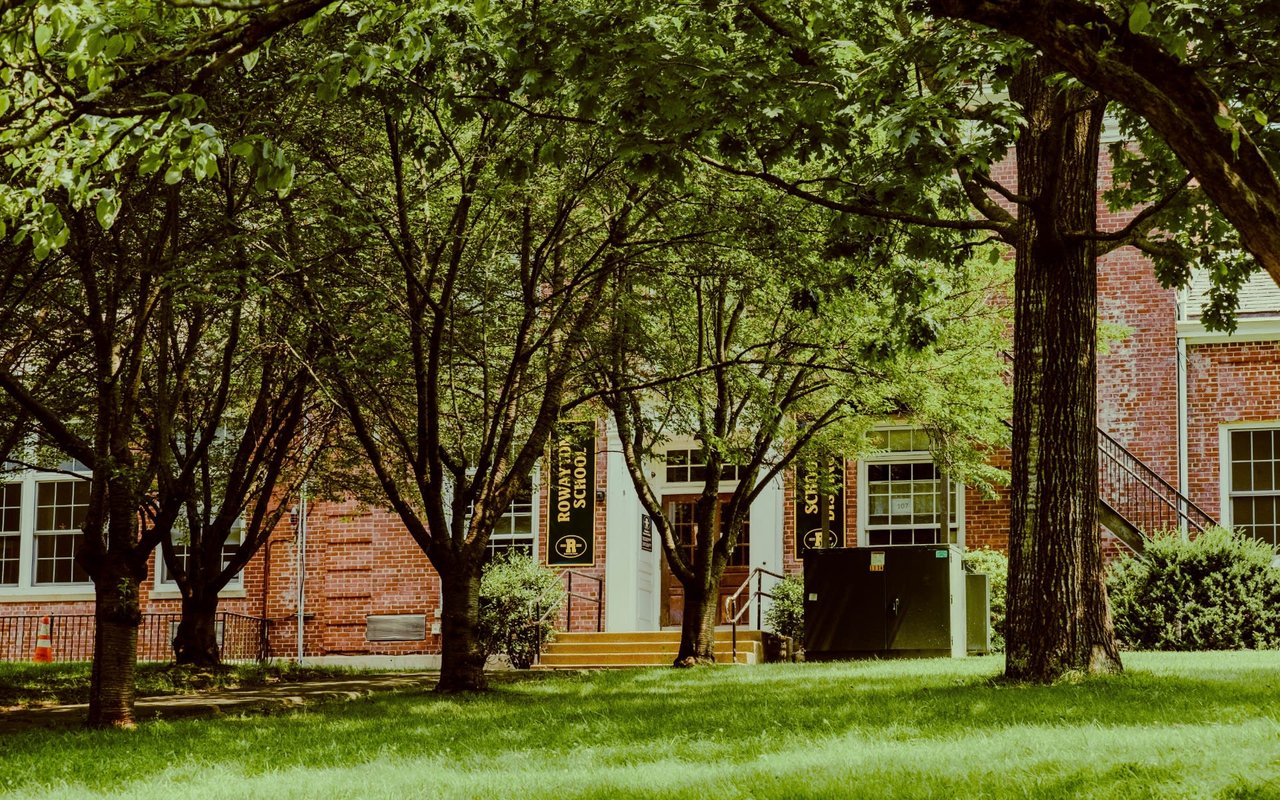
With no traditional downtown, Weston's schools serve as the town's social center. All four schools sit together on a single 117-acre wooded campus off School Road: Hurlbutt Elementary (Pre-K to Grade 2), Weston Intermediate (Grades 3 to 5), Weston Middle (Grades 6 to 8), and Weston High (Grades 9 to 12). For families with children in multiple grades, one campus means one drop-off.
The district enrolls about 2,100 to 2,200 students with a student-to-teacher ratio near 11:1 and graduating classes of roughly 175 to 195. It routinely ranks in the top three to five districts in Connecticut on Niche and U.S. News, with high AP participation and a graduation rate above 98%. Despite its size, the district offers robotics and engineering tracks, award-winning arts programs including orchestra and theater, and competitive athletics with turf fields and indoor facilities on campus.
The Lucius Pond Ordway–Devil's Den Preserve, managed by The Nature Conservancy at 33 Pent Road, covers roughly 1,800 acres across Weston and Redding. It's the largest protected preserve in Fairfield County and Weston's defining natural landmark.
Twenty miles of blazed trails wind through oak-maple woodland, wetlands, streams, and dramatic rocky ridges, connecting to the broader 70-mile Saugatuck Valley Trails System. The preserve protects part of the West Branch of the Saugatuck River watershed and supports over 500 species of trees and wildflowers, more than 140 bird species, and wildlife including red fox, bobcat, and coyote. It's open sunrise to sunset for hiking, trail running, birding, snowshoeing, and cross-country skiing. Dogs, bicycles, hunting, fishing, and camping are prohibited. Homes in the northern sections of town that back onto the preserve offer some of the most private settings in Weston.
Lachat Town Farm, at 106 Godfrey Road West, is a historic working farm run by the nonprofit Friends of Lachat with the Town of Weston. Since Weston has no town square, Lachat effectively serves as one.
From late spring through fall, the farm hosts Friday afternoon farmers' markets and the "Music in the Meadow" summer concert series, plus seasonal winter markets. Its renovated barn and the Offutt Center host farm-to-table dinners, culinary classes, and the annual Thanksgiving Community Feast. Year-round programs include children's farm camps, gardening workshops, outdoor yoga and tai chi, and holiday crafts. Outside of events, the gardens, barnyard animals, and walking trails are open to residents. For newcomers, Lachat is the fastest way to meet neighbors.
Weston's only retail plaza is the Weston Shopping Center at 190 Weston Road. It covers the essentials: Lily's Weston Market for groceries, The Weston Pharmacy, Aspetuck Wine & Spirits, Lunch Box deli and café, a post office, bank, dry cleaner, and auto service. It sits next to the library, Town Hall, and school campus, so many errands fit into a school run.
For everything else, residents drive 5 to 15 minutes south on Route 57 into Westport. That's where you'll find Whole Foods, Trader Joe's, and Balducci's, Post Road retail, downtown boutiques, fine dining, express trains, and Compo Beach and Burying Hill Beach. In practice, Weston and Westport function as one lifestyle: you live in the woods and shop on the coast.
Every home in Weston runs on a private well and septic system, since two-acre lots make municipal water and sewer lines impractical. This is the part of Weston ownership that most surprises buyers coming from the city, so it's worth planning for before you make an offer.
Wells: Most homes use drilled bedrock wells. New wells require a full potability panel, but resale homes typically get only standard bacteria testing unless the buyer requests more. Ask for an expanded panel covering arsenic, uranium, radon, and lead. Whole-house filtration and softening systems are common, though Connecticut code prohibits discharging softener backwash into a septic system.
Septic: Systems are regulated by the Aspetuck Health District, and tanks should be pumped every three to five years. Any addition, pool, or extra bedroom requires a B-100A site review to confirm the lot still has compliant primary and reserve leaching areas. If you plan to expand a home, confirm this before you buy.
Heating and power: Natural gas is largely unavailable, so most homes heat with oil or propane, sometimes alongside heat pumps. Heavy tree cover can cause multi-day outages during storms, and because the well pump runs on electricity, losing power also means losing water. That's why whole-house standby generators, usually propane-fueled, are treated as essential in Weston.
Buying in Weston means evaluating more than the house: zoning, septic capacity, well quality, generator readiness, and which section of town fits your commute all shape the value of a property. Jillian Klaff brings over 30 years of experience in Lower Fairfield County and more than $600 million in career sales as a consistent top producer at Coldwell Banker Realty in Westport. Her background as a New York CPA gives her a sharp eye for pricing and negotiation, and her expertise in land purchases and new construction, including partnering on two spec homes of her own, is especially valuable in a town where many buyers renovate, expand, or build. Whether you're searching for a mid-century modern in South Weston, an equestrian property in Aspetuck, or a two-acre lot to build on, contact Jillian at (203) 858-2095 or [email protected] to start your Weston home search.
Weston has 3,568 households, with an average household size of 2.91. Data provided by the U.S. Census Bureau. Here’s what the people living in Weston do for work — and how long it takes them to get there. Data provided by the U.S. Census Bureau. 10,396 people call Weston home. The population density is 526 and the largest age group is Data provided by the U.S. Census Bureau.
Total Population
Population Density Population Density This is the number of people per square mile in a neighborhood.
Median Age
Men vs Women
Population by Age Group
0-9 Years
10-17 Years
18-24 Years
25-64 Years
65-74 Years
75+ Years
Education Level
Total Households
Average Household Size
Average individual Income
Households with Children
With Children:
Without Children:
Marital Status
Blue vs White Collar Workers
Blue Collar:
White Collar:
Based on information submitted to the MLS GRID as of . All data is obtained from various sources and may not have been verified by the broker or MLS GRID. Supplied Open House Information is subject to change without notice. All information should be independently reviewed and verified for accuracy. Properties may or may not be listed by the office/agent presenting the information.
Search by Cities Search by Zip Codes